
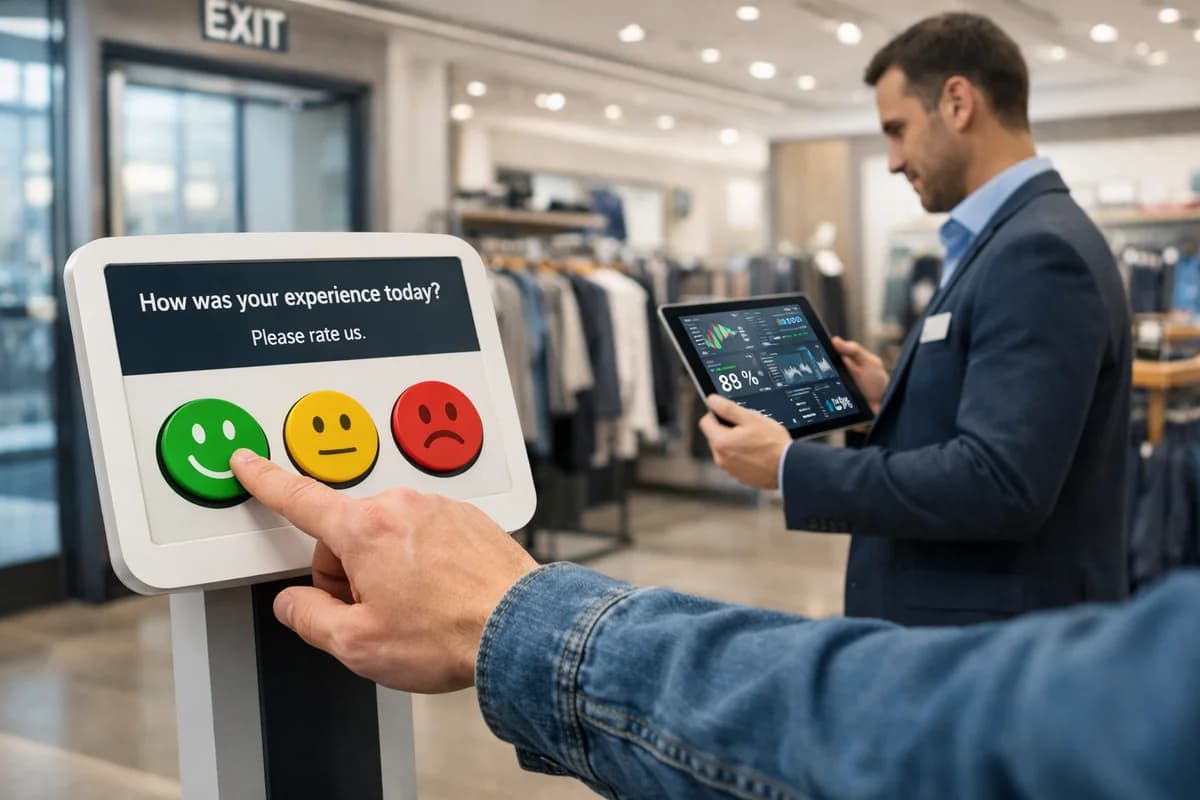
In 2026, customer experience isn't just a competitive advantage — it's the defining factor that separates the winners from the rest of the market.
Consumers today expect seamless, personalized, and frictionless interactions at every touchpoint. At the same time, retailers are facing pressure to innovate faster than ever before. In this landscape, real-time customer feedback has emerged as a cornerstone strategy for building loyalty, improving service quality, and driving long-term growth.
This article explores why real-time feedback — exactly what SmileSense captures — is not just "nice to have," but a strategic advantage for modern retail.
The Changing Landscape of Retail Experience
Recent industry reports consistently show that customer experience (CX) continues to evolve rapidly in 2026. Retailers are no longer assessed solely on price or convenience — emotional resonance and service quality rank just as high in consumer decision-making. Consumers now seek experiences that feel authentic, seamless, and highly relevant to their needs.
The era of passive feedback — where retailers gather survey data days or weeks after an interaction — is fading. Instead, brands are shifting toward real-time visibility into customer sentiment, enabling faster response and more meaningful customer engagement.
Real-Time Feedback Is a Competitive Advantage
According to a major industry analysis of CX trends for 2026:
"Real-time insights will become a competitive advantage."
This means that companies that can sense and act on customer experience data in real time are far more likely to outperform those that rely on delayed feedback.
Why?
Because customer expectations move faster than ever:
- 52% of consumers have stopped doing business with a brand due to a poor customer experience, according to a major PwC industry survey.
- Immediate responses to dissatisfaction help protect brand perception before negative reviews, social posts, and public complaints ever occur.
In short — real-time feedback reduces friction at the moment of experience and enables immediate recovery, strengthening customer loyalty long-term.
From Data to Action: How Real-Time Feedback Drives Business Value
Real-time feedback isn't just about hearing what customers think — it's about acting on those signals at the speed of experience.
Here's how real-time feedback delivers strategic value:
Detect Issues Before They Become Problems
Traditional surveys collect feedback after the experience is over. Real-time systems like SmileSense capture sentiment while the experience is still fresh, enabling staff to respond instantly.
Improve Customer Satisfaction Metrics
Studies on real-time analytics consistently show that fast response leads to:
- Significant improvements in customer satisfaction
- Increased engagement and loyalty
- Lower response times to problems
- Better operational efficiency overall
This means happier customers and stronger retention — both key drivers of revenue in a competitive retail environment.
Better Data for Smarter Decisions
Real-time feedback feeds dynamic dashboards and analytics tools that allow brands to:
- Spot trends as they emerge
- Understand context (time of day, location, staff, etc.)
- Translate customer insight into operational change
- Drive product, service, and marketing decisions faster
Real-Time Feedback Enables Proactive Service
One of the biggest shifts in 2026 is the move from reactive to proactive customer management. Instead of waiting for complaints, leading retailers act before negative sentiment impacts reputation.
Real-time feedback is fundamental to this shift:
- It allows for immediate service recovery.
- It gives employees visibility into immediate sentiment changes on the shop floor.
- It helps frontline teams personalize responses and resolve issues on the spot.
In a marketplace where customer expectations evolve quickly, this kind of proactive engagement builds trust, loyalty, and share of wallet.
The Retail Experience Beyond Transactions
Industry analysts emphasize that retail in 2026 is experience-led, not transaction-led. The most successful brands are those that build emotional resonance and customer connection, not just efficient checkout lines.
Real-time feedback is crucial here — it shifts retail strategy from:
"What happened?"
to
"How is the customer feeling now?"
This context puts emotional experience at the heart of decision-making — and that's what differentiates leading brands from the rest.
Conclusion: Real-Time Feedback Isn't the Future — It's Now
In 2026, the rules of retail have transformed:
- Data is abundant, but real-time insight is rare.
- Customer expectations have risen, but attention spans have shortened.
- Brands compete on experience as much as price.
- Sentiment and responsiveness drive loyalty.
Real-time feedback gives retailers the ability to meet these challenges head-on — delivering actionable insight in the moment, improving service outcomes, and protecting brand reputation.
For brands that want to lead rather than follow, real-time feedback isn't just a tool — it's a core strategic advantage. And for businesses using SmileSense, that advantage becomes measurable and meaningful.