
In today's digital world, a business's online reputation can make or break its success.
A single negative review on Google Maps, TripAdvisor, Yelp or similar platforms can spread widely — damaging trust, decreasing bookings, and reducing repeat visits.
But what if you could detect dissatisfaction before it becomes a public complaint?
That's where real-time feedback enters the strategy.
By capturing customer sentiment at the exact moment of experience — while they're still in your business — companies can proactively intervene and turn unhappy guests into happy advocates.
The Digital Reputation Economy
Today, customers don't just form impressions — they publish them.
According to studies, most users read online reviews before visiting a business, and many trust these reviews as much as personal recommendations.
A single negative review can result in:
- Lower search ranking on Google Maps
- Reduced clicks and impressions
- Fewer reservations or walk-ins
- Lost revenue over time
But nearly every negative review starts as a dissatisfied customer — someone who could have been won back before they left your premises.
This is where real-time detection changes everything.
Why Waiting for Reviews Is Too Late
Traditional feedback tools — like email surveys or feedback forms sent after the visit — arrive after the experience is over.
By then:
- The emotional response has faded
- The customer has already formed an opinion
- They are in a separate mental state from the visit
Delayed feedback can capture sentiment, but it is reactive at best.
By contrast, real-time feedback captures sentiment in the moment — before the customer leaves the physical (or digital) environment.
This creates opportunities for service recovery that simply don't exist with post-visit surveys.
What Is Service Recovery?
Service recovery is the process by which a business:
- Detects an issue quickly
- Responds to the customer immediately
- Fixes the situation before it escalates
- Ensures the customer leaves satisfied
Studies show that customers who believe a business responded well to a problem are more loyal than those who never experienced a problem at all.
In other words:
A well-handled complaint can turn a detractor into your strongest advocate.
But the first step — detection — requires capturing feedback before the customer moves on.
That's where real-time solutions like SmileSense shine.
How Real-Time Feedback Detects Unhappy Customers
Real-time feedback is designed to be:
- Immediate — no waiting after the visit
- Non-intrusive — easy to give and anonymous
- Continuous — always available
- Actionable — gives clear sentiment data
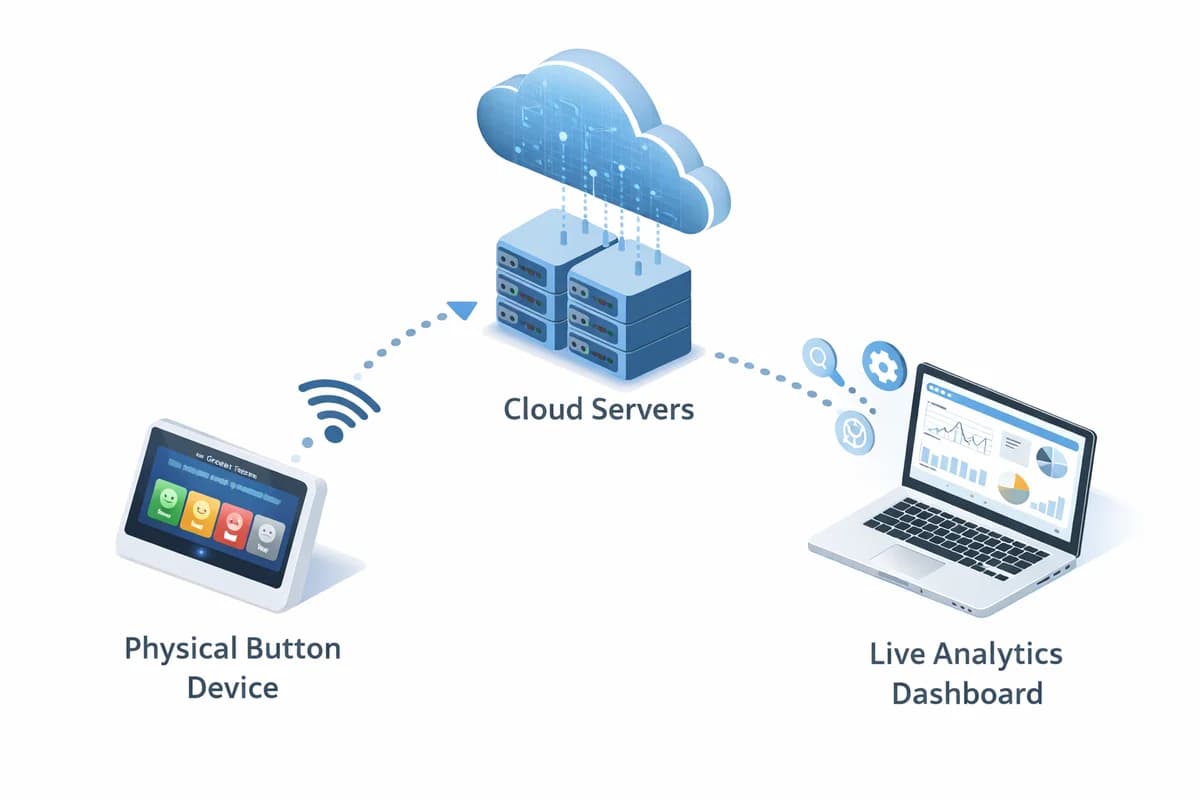
Instead of waiting days for an email response, SmileSense lets customers express satisfaction or dissatisfaction while they're still on site.
This means:
- You see the unhappy visitor before they post a review
- Your staff gets alerts when a negative signal is detected
- You can respond instantly, often on the spot
This positional advantage is critical.
Turning Dissatisfaction Into Opportunity
Once a dissatisfied customer is identified in real time, businesses can:
Intervene Immediately
Approach the customer and resolve the issue while they are still present.
Examples:
- Fix a seating issue
- Replace an unsatisfactory product
- Offer a small compensation or goodwill gesture
This can transform a negative experience into a positive one before it hits the internet.
Personalize the Response
Real-time alerts can include context like:
- Time of visit
- Location within premises
- Service category
- Staff involved
This allows your team to engage meaningfully, not generically.
Follow Up Proactively
After resolving the issue, invite the customer to reconsider their feedback online — now with a positive outcome to share.
The ROI of Real-Time Reputation Management
Managing online reputation is no longer optional — it's a core marketing strategy.
The business value of real-time feedback includes:
- Higher overall ratings — Customers leave happier, and positive experiences outweigh the negative.
- Lower negative reviews — Fewer unresolved issues become public complaints.
- Increased visibility in search — Higher ratings and fresh feedback help search ranking on Google Maps and other directories.
- Better customer loyalty — Customers feel heard and valued — and they come back.
- Reduced cost of crisis management — Less time and money spent responding to public complaints.
For many businesses, the ROI of proactive reputation management pays for itself in increased bookings and customer retention.
SmileSense as a Reputation Shield
Unlike delayed surveys, SmileSense empowers businesses to detect dissatisfaction at the exact point when it matters most — while the experience is happening.
With real-time sentiment signals and actionable alerts, your team can:
- Spot unhappy visitors before they post a review
- Fix issues at the moment of experience
- Improve customer perception instantly
- Shift online reputation from reactive to proactive
In essence, real-time feedback transforms customer feedback from a reporting tool into a reputation management system.
Case Example: From Risk to Reward
Imagine two customers exit your restaurant:
- Customer A finishes satisfied — taps a positive signal
- Customer B taps a negative signal — but is still in sight
Before real-time feedback, Customer B might:
- Go home frustrated
- Open TripAdvisor
- Write a 1-star review with specific complaints
But with real-time feedback:
- Your host approaches Customer B
- You address the concern immediately
- The guest reconsiders their experience
- The negative review never happens
Instead of reputation damage, you create:
- A resolved situation
- A satisfied customer
- Potentially a positive online review
That's the power of service recovery with real-time feedback.
Final Takeaway
Online reputation isn't just about what people say — but when they say it.
Letting reviews accumulate after the visit means surrendering control.
But capturing sentiment at the moment of experience gives you the first move.
Real-time feedback doesn't just collect data.
It prevents problems before they become public.
And that's how you secure — and grow — your online reputation in the digital age.