
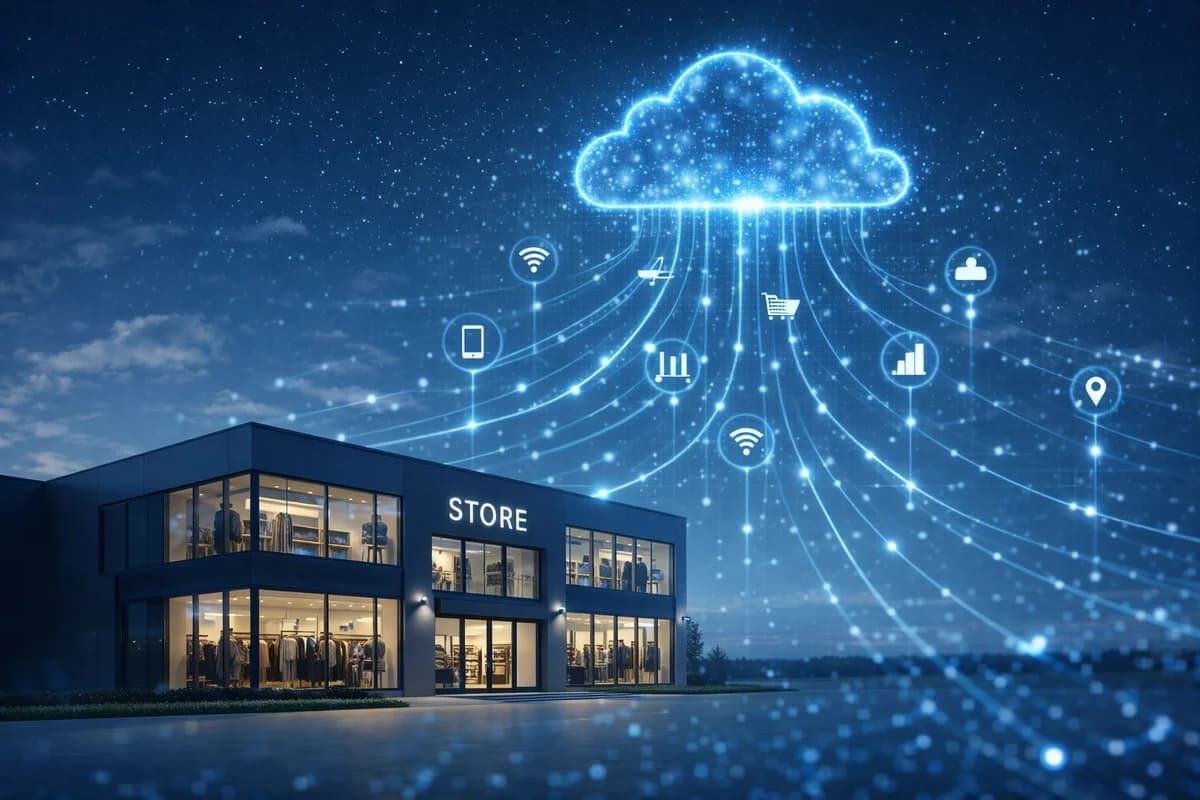
In 2025–2026, retail is rapidly evolving from traditional store models into connected digital ecosystems where physical and virtual experiences merge. At the center of this transformation is the Internet of Things (IoT) — a network of connected devices working together in real time to collect, transmit, and act on data.
For retailers, IoT is no longer a futuristic concept — it's a strategic imperative that enables better operations, smarter inventory management, and deeper customer insights. But how exactly do IoT systems bridge the gap between a physical store and the cloud? And what real-world benefits can they deliver?
This article breaks down the technical process and highlights why connected devices are reshaping modern retail.
What Is IoT in Retail?
IoT refers to physical devices equipped with sensors, connectivity, and software that communicate over the internet to gather, exchange, and act on data. In retail, these devices include:
- Smart shelves and RFID tags
- Beacons and Bluetooth sensors
- Connected point-of-sale systems
- Environmental and motion sensors
- Inventory trackers
- Customer interaction devices like digital kiosks
These devices form an integrated ecosystem where store activity becomes continuously measurable and actionable, rather than static and siloed.
How IoT Connects the Store to the Cloud
Let's walk through a typical data flow in a connected retail environment:
1. Sensor Activation
Every IoT device — whether a smart shelf or a customer interaction sensor — begins by detecting an event: an item moves, a button is pressed, a customer walks by. This data is captured immediately at the edge.
2. Local Processing and Packaging
The device processes the raw signals into structured data. This often includes metadata like:
- Device identifier
- Timestamp
- Location within the store
- Type of interaction
This step prepares the data for efficient transmission.
3. Secure Data Transmission
The processed data is sent over Wi-Fi, BLE, or cellular connectivity to cloud endpoints. Retail IoT systems rely on stable network infrastructure to ensure minimal latency and high reliability — meaning data arrives in real time rather than in batches.
4. Cloud Processing and Storage
Once in the cloud, data undergoes:
- Validation
- Aggregation
- Analytics
- Long-term storage
- Integration with dashboards and business systems
This enables unified insight across all stores and devices.
5. Real-Time Dashboards and Alerts
From the cloud, insights are fed into dashboards where managers and analysts can view live metrics such as inventory levels, customer traffic patterns, or device statuses. This is where actionable intelligence becomes visible.
Why This Matters: Immediate Business Value
The power of IoT lies not just in connectivity — but in real-time insight and actionability.
1. Real-Time Inventory Management
Smart shelves and connected RFID systems automatically report stock levels, enabling:
- Automated replenishment
- Reduced stockouts
- Less manual auditing
- Better merchandising decisions
This keeps products available and customer satisfaction high.
2. Smarter Operations and Analytics
IoT devices generate a constant stream of business data. Retailers can detect issues instantly — from low shelf inventory to spikes in customer flow — and respond quickly.
3. Enhanced Customer Experience
Connected beacons and sensors help personalize the in-store journey:
- Location-aware offers
- Customized promotions
- Tailored product recommendations
- Better service timing
This phygital (physical + digital) interaction brings the convenience of online personalization into brick-and-mortar stores.
4. Cross-Channel Integration
With data centralized in the cloud, retailers can:
- Synchronize online and offline experiences
- Share insights across departments
- Use AI and analytics to forecast trends
- Improve overall service strategy
This level of integration is critical for omnichannel success.
IoT in Action: Real Use Cases
Large retailers are already deploying IoT at scale:
- Smart shelves that automatically trigger restock alerts
- Connected POS systems that keep sales running even with network disruptions
- Sensor-based customer flow mapping to optimize layout and staffing
- Automated inventory tags that track products from warehouse to shelf
Walmart, for example, is rolling out millions of ambient IoT sensors across thousands of stores to track goods in real time, aiming to improve supply chain visibility and reduce manual checks.
IoT Implementation Challenges
While the benefits are clear, retailers must address several practical issues:
- Network infrastructure — IoT systems need robust connectivity
- Data volume and processing — massive data streams require scalable cloud processing
- Security and privacy — protecting sensitive customer and business data
- Integration — aligning IoT with legacy systems and analytics platforms
When these challenges are managed, the value far outweighs the complexity, with measurable improvements across efficiency, customer engagement, and operational intelligence.
The Future of Retail: Connected and Intelligent
IoT is no longer a peripheral experiment — it's central to how stores operate in 2026. It enables:
- Real-time data flows
- Cloud-based analytics
- Hyper-personalized customer interactions
- Agile decision-making
Retail is transforming into a connected, observant, and data-driven system where every physical interaction becomes a digital insight.
For platforms like SmileSense, this environment not only adds value to the customer experience but also unlocks new opportunities for real-time service improvement, data fusion, and actionable retail intelligence.
Sources
- IoT in Retail: Insights, Benefits, and Future Trends
- IoT in Retail: The Global Shift Toward Smarter Stores
- Role of IoT in Retail: Benefits and Cost
- IoT Technology in Retail: From Inventory to Customer Experience
- Key IT Trends in the Retail Industry in 2026
- Walmart rolls out new IoT sensors across 4,600 stores